
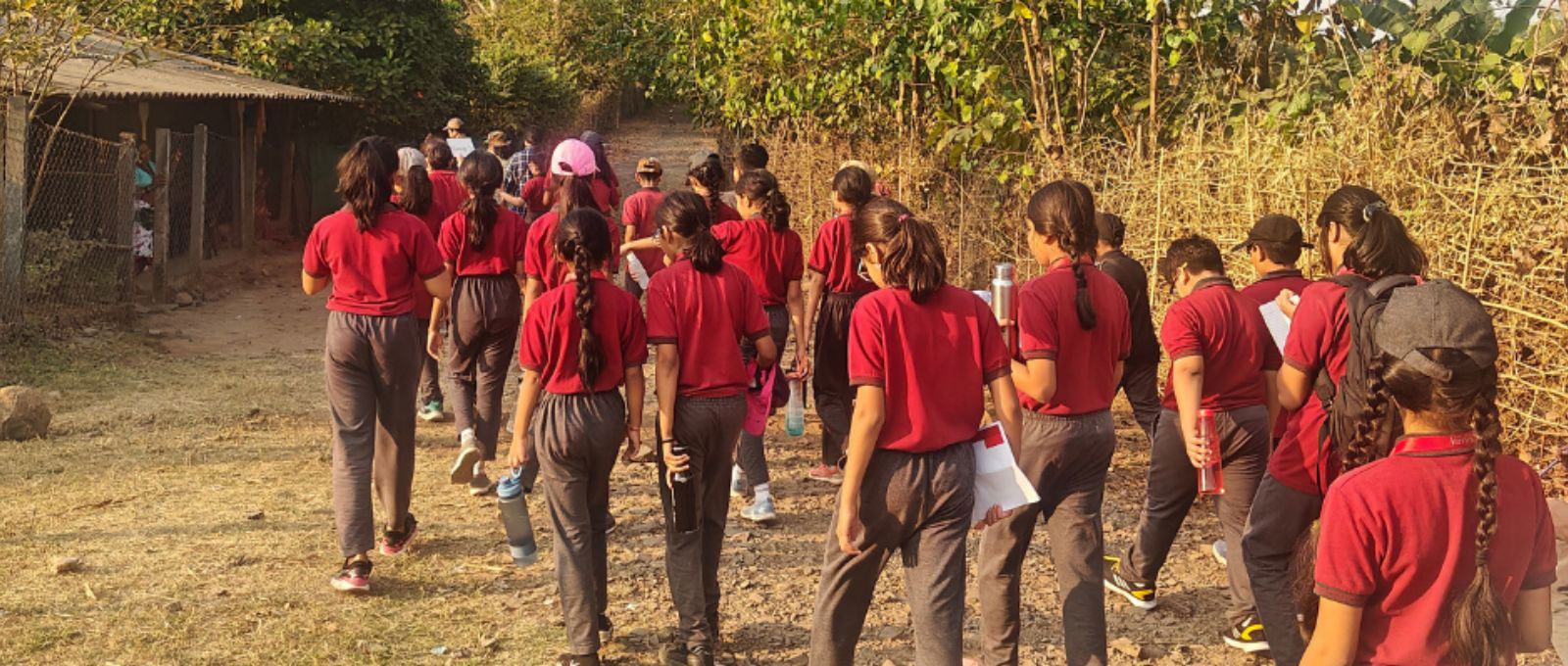

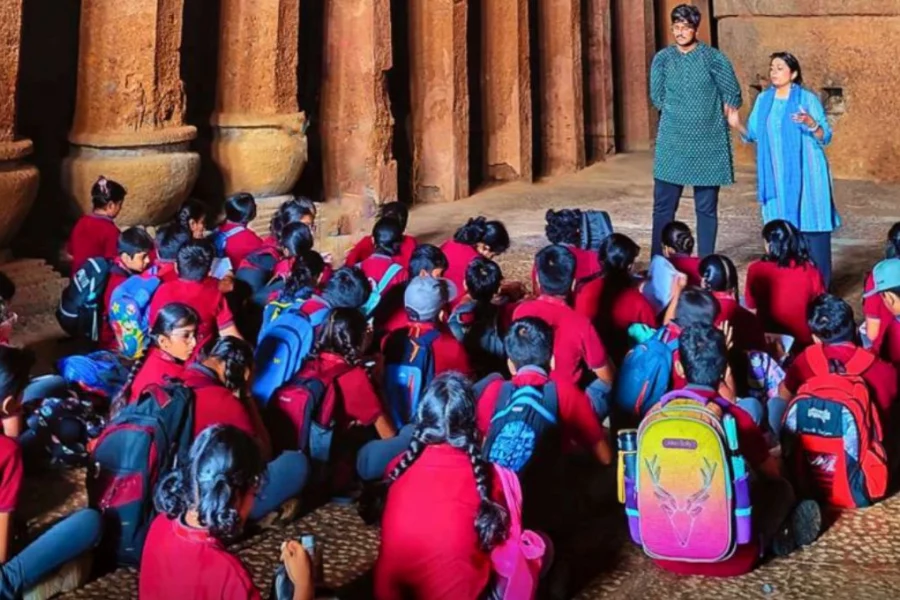
The Somaiya School’s Grade 5 students began the new year not with textbooks, but with an unforgettable two-day journey into rural life and tribal heritage. The Anubhuti: Nareshwadi experiential learning programme, held from 9 to 10 January 2025 in Dahanu, was curated by the Somaiya Centre for Experiential Learning (SCEL) to help students explore the deep connections between culture, sustainability, and community life.
Discovering the World of Tribes
Before setting off, a pre-trip session challenged students’ assumptions about tribal life. They learned about the Warli community in Maharashtra and even compared them with the Sami and Inuit tribes of the Arctic, using videos and discussions to understand how indigenous communities around the world live in harmony with nature. This grounding made the upcoming visit more meaningful — transforming curiosity into genuine respect and empathy.
A Day of Art, Culture, and Friendship
The adventure began with an early-morning bus ride from Mumbai to Dahanu. For many, it was their first overnight trip without parents, adding excitement and a few nervous smiles. Their first stop was Nareshwadi Learning Centre, where the day unfolded through colour, music, and laughter.
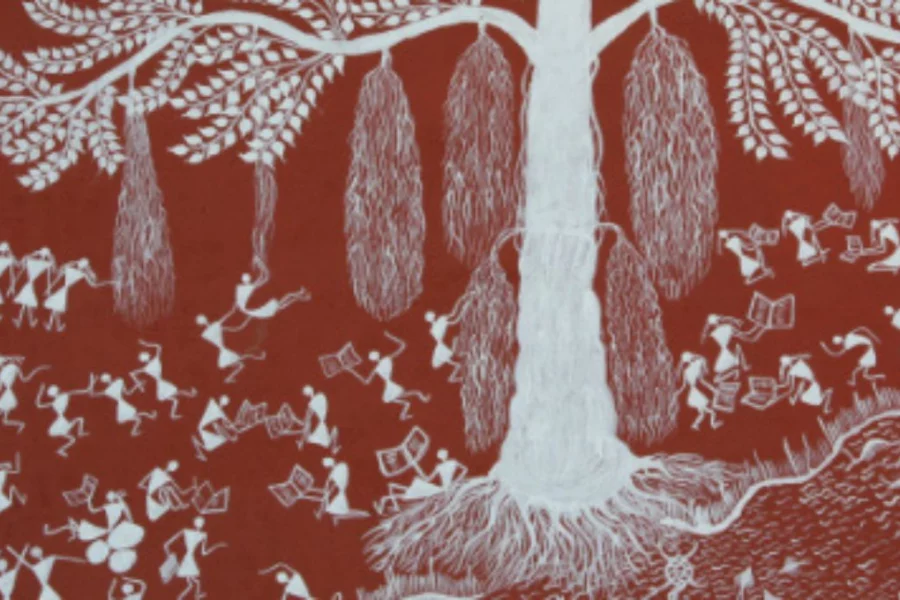
The highlight was a Warli painting workshop conducted by artist Mr Deepak Sahare. Surrounded by murals created by Nareshwadi students, the young participants learned the origin and symbolism of the Warli art form. They began by practising basic shapes — circles, triangles, and lines — before transforming them into elaborate scenes of farming, dancing, and daily village life. Each brushstroke became a story. Students painted their own fridge magnets as keepsakes, proudly carrying home a piece of tribal culture in their hands.
The session also featured a special moment of pride when Mr Aniket Mahulikar, General Manager of Nareshwadi, revealed that some of the students’ Warli artworks had been printed on Blinkit shopping bags — proof that traditional art can find its way into modern life.
Later that afternoon, the group visited Vankas, a nearby Warli village. Divided into small groups, students explored the mud-walled homes decorated with white rice-paste murals, watched families at work in the fields, and observed everyday objects made from natural materials — from palm-leaf brooms to hand-moulded grain silos. They tried their hand at pumping groundwater, crafting palm-leaf artefacts, and even joined the village children for spirited games of Kabaddi and Langdi. By the end of the day, barriers between “city” and “village” had melted into laughter and shared memories.
As evening fell, students gathered around a campfire, singing, dancing, and reliving the day’s discoveries. For most, it was their first time sleeping away from home — and they loved every minute of it.
Sunrise on the Beach and Lessons from the Soil
Day 2 began quietly but powerfully at Dahanu Beach, where the group welcomed dawn with a guided yoga session led by Ms Devanshi Dubariya, an intern from Somaiya Institute of Dharma Studies. The rhythmic sound of waves merged with deep breathing, grounding the children before another day of exploration.
From there, they travelled back to Nareshwadi’s farms to learn the science of organic and sustainable farming. Working in small teams, they sowed seeds, ploughed soil, and planted saplings under the guidance of agricultural experts. The activity offered lessons far beyond agriculture — patience, teamwork, and responsibility took root in the process.
At the Polyhouse Unit, students saw how technology supports modern agriculture. They studied temperature regulation, drip-irrigation systems, and pest-control methods while examining blooming capsicum plants. Many were amazed at how science and sustainability can coexist so seamlessly.
Their exploration continued through lush chikoo and mango orchards, where they savoured freshly plucked fruits and homemade lemon juice. The experience was both delicious and eye-opening — connecting the dots between farm and table in a way no classroom could replicate.
Sustainability in Action
The next segment focused on Nareshwadi’s circular model of sustainability. At the Gir cow dairy, students learned about animal care, milk production, and eco-friendly packaging. Moving to the biogas plant, they traced how cow dung and farm waste are converted into clean fuel for community kitchens. Every stop revealed a new link in the chain of self-sufficiency, showing how nothing in nature goes to waste.
The day concluded with a lively Tarpa dance performance by the Warli and Konkana tribes. The traditional circular dance, accompanied by the haunting melody of the Tarpa horn, soon had all the students joining in — stepping, twirling, and laughing in unison. It was more than entertainment; it was a celebration of unity, rhythm, and cultural pride.
Reflections That Last
By the end of the two-day immersion, the young travellers had transformed. Their reflections spoke volumes:
“I thought tribes were dangerous, but they were kind and friendly.”
“I realised farming isn’t old-fashioned — it’s essential for life.”
“Playing Kabaddi with the village kids was the best part of the trip.”
These shifts in perspective capture the essence of experiential learning — education that shapes not just what students know, but how they see the world.
The Anubhuti: Nareshwadi programme was more than a school trip; it was a living classroom where culture met curiosity, and sustainability came alive through touch, taste, and connection. The Grade 5 students returned home not just with souvenirs and stories, but with new eyes — ready to value simplicity, respect nature, and celebrate India’s vibrant rural heritage.

Leave a Comment