
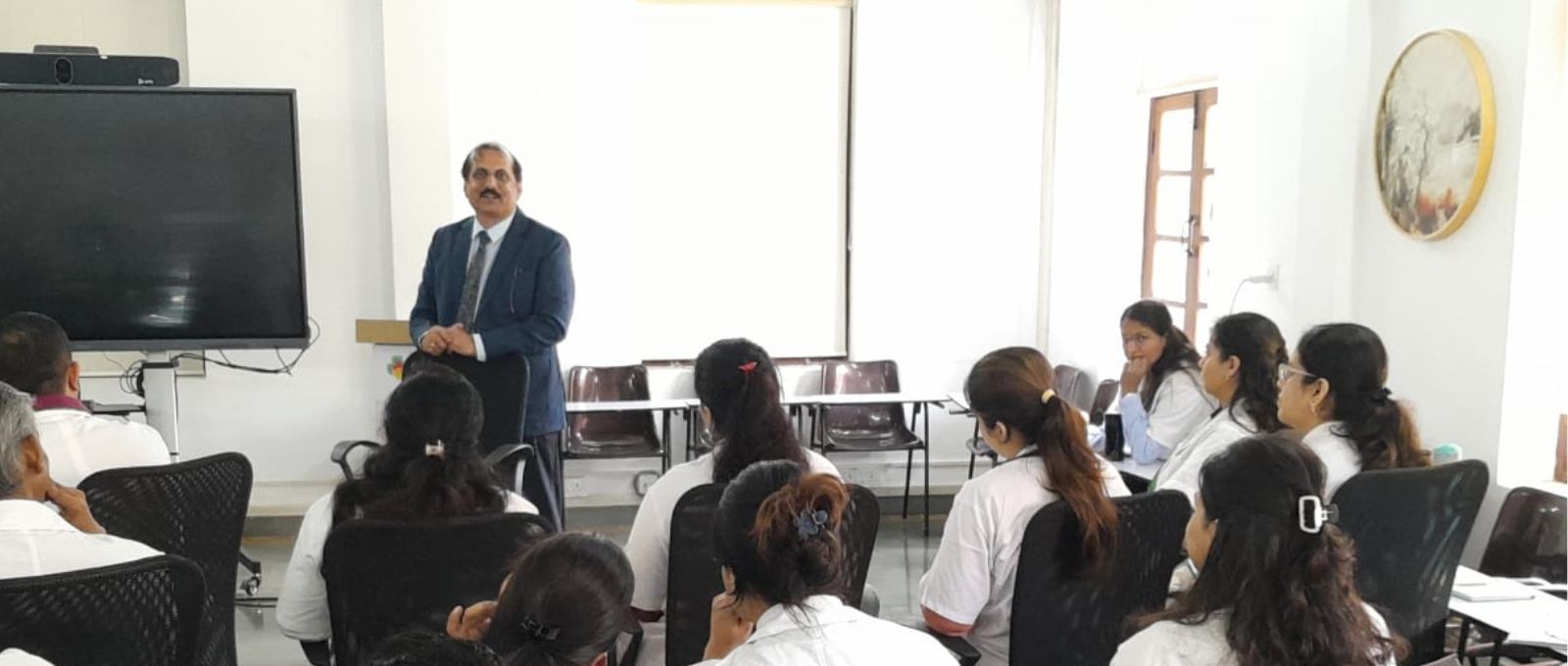

What does it take to turn a clinical challenge into a real-world healthcare solution? At K J Somaiya College of Physiotherapy, a recent faculty development session explored exactly that—shifting the focus from theory to application, and from research to impact.
On 23rd February 2026, faculty members came together for a session on Medical Device Innovation Research, led by Dr G Arun Maiya, an academician known for his work in translational research and interdisciplinary collaboration. But this wasn’t a typical academic lecture. It was a deep dive into how ideas can move beyond papers and into practice.
Here’s the thing. Innovation in healthcare often feels like something that happens elsewhere—in advanced labs or large tech ecosystems. What this session did was bring that idea closer home. It reframed innovation as something that can begin within everyday teaching, research and clinical observation.
Dr Maiya broke down the process in a way that made it tangible. He spoke about identifying real clinical problems, applying design thinking, and navigating the journey from idea to device. The conversation extended to regulatory pathways, the importance of patents, and how academia–industry partnerships can accelerate innovation.
What this really means is that research doesn’t have to stop at publication. It can lead to prototypes, intellectual property, and even startups. For educators and clinicians, that shift in perspective is powerful.
The session quickly became interactive, with faculty members engaging in discussions around practical challenges and opportunities within their own fields. Questions moved beyond “what is innovation” to “how do we actually do this here?”
The response reflected the relevance. Participants highlighted takeaways such as understanding patent processes, applying for research grants, and recognising the role of innovation in building sustainable healthcare solutions.
At a larger level, this aligns with Somaiya’s ongoing push to build a culture where research, innovation and entrepreneurship are closely linked. Because meaningful change in healthcare doesn’t come from isolated breakthroughs—it comes from consistently asking better questions and being equipped to act on them.
And sometimes, that shift begins with a single conversation.
Leave a Comment