
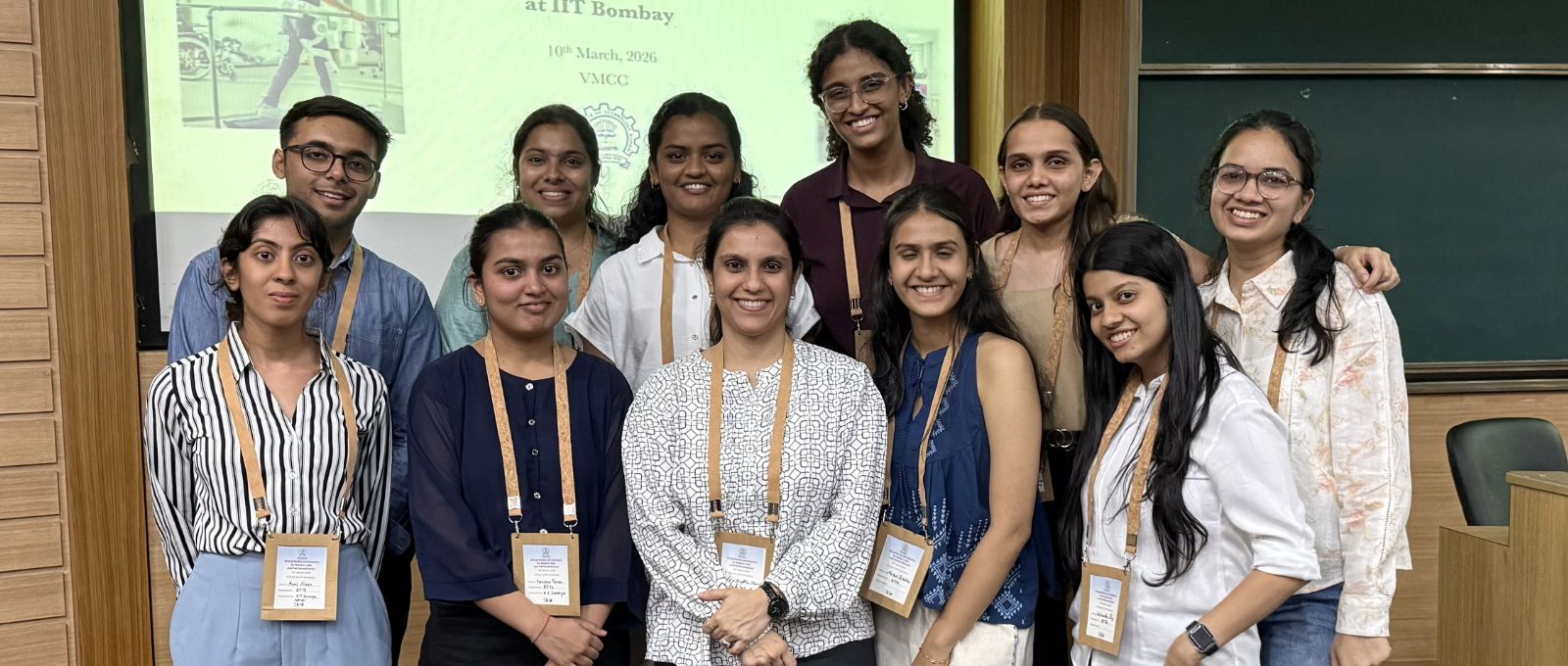

On 10th March 2026, students from the Innovation Cell at K J Somaiya College of Physiotherapy stepped into IIT Bombay to explore what the future of rehabilitation could look like.
At a workshop hosted at the Victor Menezes Convention Centre, the focus wasn’t just on tools like virtual reality or robotic systems. It was on what they make possible. Imagine a patient relearning balance not through repetition alone, but through immersive environments that respond in real time. Or gait training that is measured, analysed and adjusted with precision that the human eye alone cannot achieve.
That’s the shift these students stepped into.
The sessions moved through biomechanics and motor control, but they didn’t stay theoretical for long. The real energy came from the questions. Why does this matter for fall prevention? How does virtual reality change patient engagement? Where does clinical judgement meet machine intelligence? The conversation kept pushing beyond “what” into “what next.”
Then came the lab visit. And that’s where things clicked.
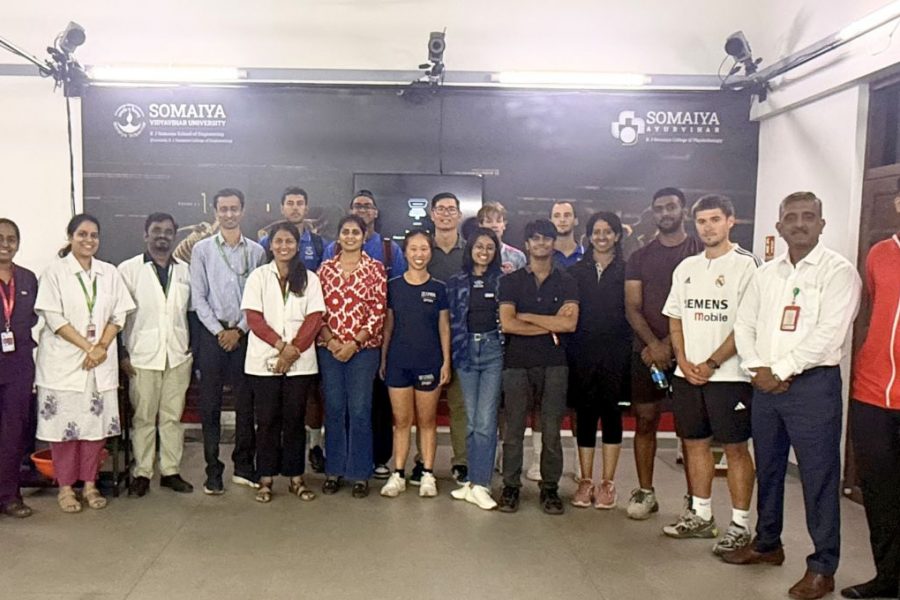
Inside the research facilities, students saw ongoing work in gait analysis and rehabilitation technology. Screens tracking movement. Systems capturing data points invisible in everyday practice. Researchers testing, refining and questioning. It wasn’t a demonstration. It was work in progress. And that made all the difference.
Because here’s the thing. When you see research as it is happening, not as a finished outcome, you start to understand the discipline differently. Physiotherapy stops being just a practice. It becomes a space for innovation.
The workshop brought together voices from engineering, biosciences and rehabilitation. That intersection is important. Recovery today isn’t shaped by one field alone. It’s built through collaboration. And the students experienced that first-hand.
What stayed with them wasn’t just the technology. It was the realisation that the field they are entering is evolving fast. Tools like virtual reality and robotics are not replacing therapists. They are expanding what therapists can do. Making interventions more personalised, measurable and, in many cases, more engaging for patients.
That kind of exposure changes how you think about learning. It pushes you to look beyond textbooks and towards possibilities.
Experiences like this are a reminder of what education can be when it steps outside the classroom. Not as an add-on, but as the story itself. Because when students encounter ideas in motion, ask better questions and see the impact of what they are learning, that’s where real understanding begins.
And maybe that’s the bigger takeaway. The future of rehabilitation isn’t something distant. It’s already being built. The question is how early you get to be part of it.
Leave a Comment