
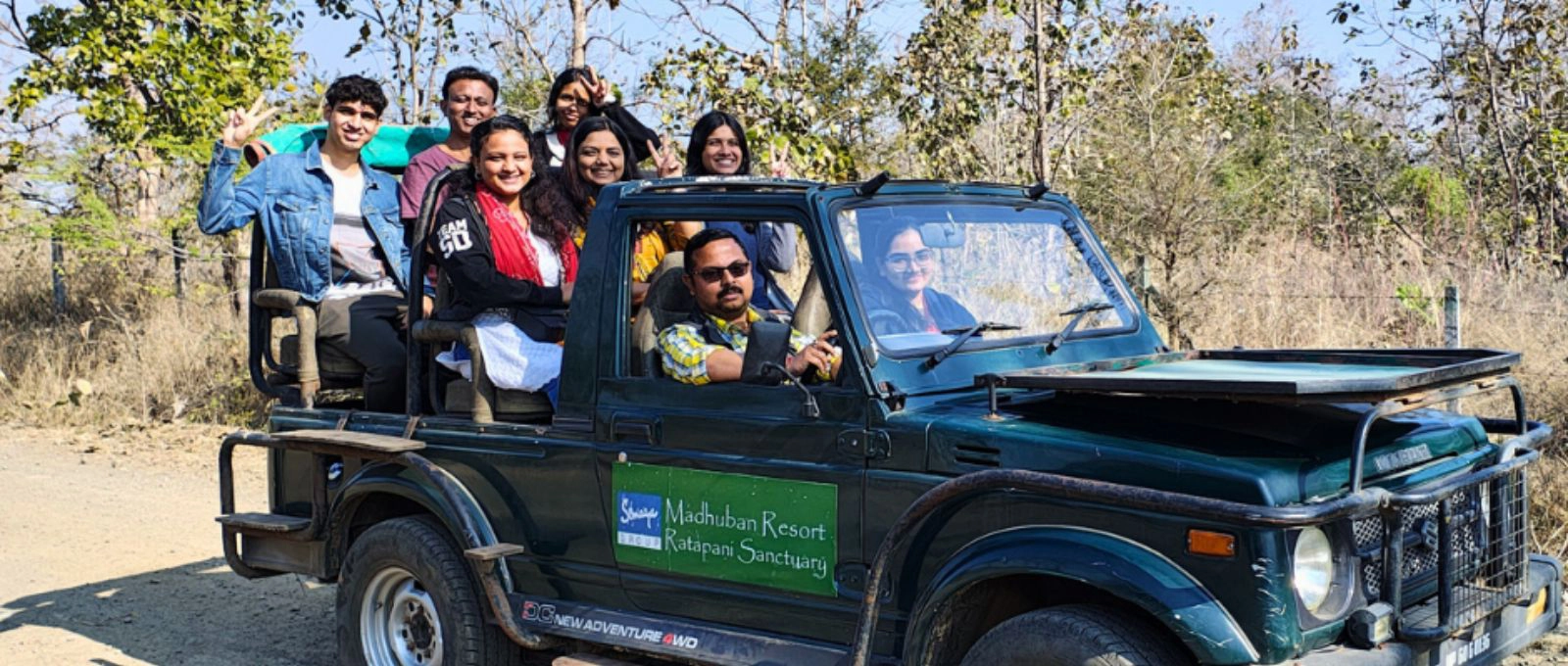

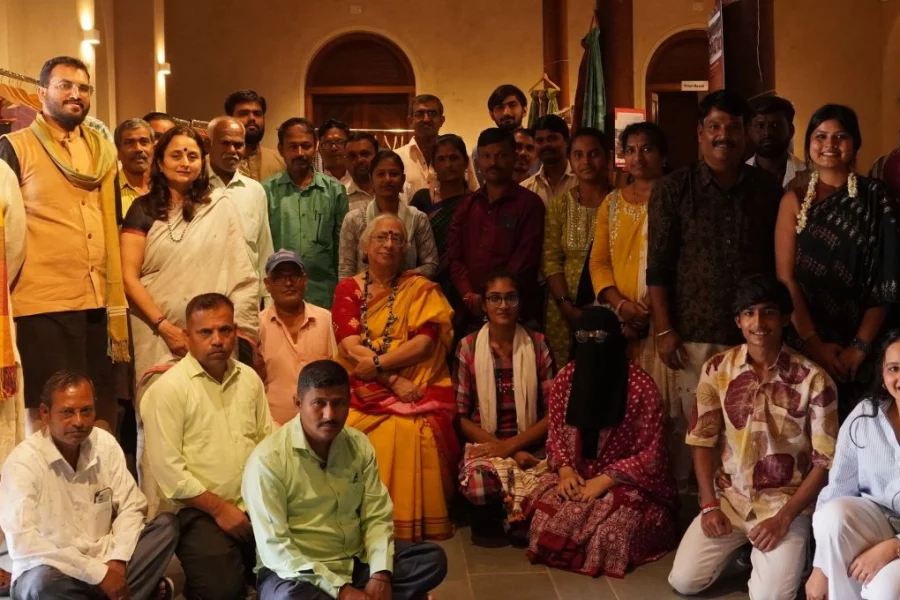
Eight students from across Somaiya Vidyavihar (SVV) and Somaiya Ayurvihar (SAV) stepped into a world where classrooms had no walls and textbooks came alive. The Anubhuti: Bhopal programme, held from 23 to 27 January 2025, offered a rare blend of nature, history, and innovation — an experiential journey designed by the Somaiya Centre for Experiential Learning (SCEL).
Set amidst the tranquil landscapes of Madhuban Resort near Ratapani Wildlife Sanctuary, the three-day programme encouraged students to connect ancient wisdom with modern sustainability and technology. Guided by Dr Urmi Thakkar and Dr Vaishali Wadhe (K J Somaiya Institute of Technology), along with naturalist Shibajee Mitra, the trip became a living lab of interdisciplinary discovery.
Day 1: Campfires, Culture, and Celestial Wonders
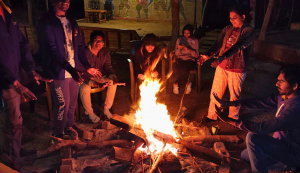 The adventure began as students arrived at Madhuban Resort, surrounded by the wild serenity of the Ratapani Wildlife Sanctuary. Setting up tents was their first test of teamwork and adaptability. Many were pitching tents for the first time — laughter, trial, and error turned the exercise into a bonding experience. Soon after, they set off on a guided walk through the forested campus, where they spotted tiger pugmarks and learned how camera traps capture animal movements at night. For students studying technology and data, seeing conservation science in action was a revelation.
As evening fell, the sky turned into their next classroom. Under the guidance of Mr Abhay Shukla from the Regional Science Centre, students gathered for a stargazing session. Peering through a reflecting telescope, they viewed Jupiter’s glowing moons, Mars, Venus, and even the distant Andromeda Galaxy. The most captivating moment came when Mr Shukla explained that some of the stars they saw had already died — their light still travelling through space. It was a humbling reminder of perspective, time, and the infinite scale of the universe.
Day 2: Tracing History in Stone
The following morning began with a journey into prehistory — a visit to Bhimbetka rock shelters, a UNESCO World Heritage Site that houses India’s oldest cave paintings. The students walked through rock formations that have witnessed over 30,000 years of human creativity. Each painting told a story — hunters chasing bison, dancers celebrating, animals etched in red and white ochre.
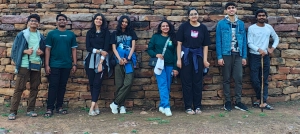
Students used reflection journals to note their observations: the evolution of artistic styles, the layering of different periods, and how early humans recorded their environment through art. It wasn’t just history they were studying; it was anthropology, design, and storytelling rolled into one.
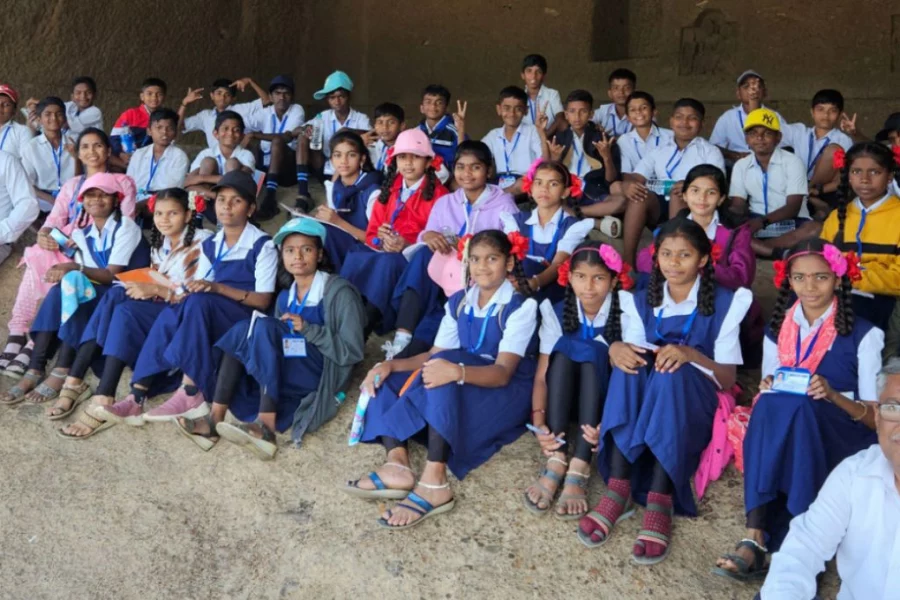
From Bhimbetka, the group travelled to the Saru Maru Caves, an ancient Buddhist monastic site once visited by Gautama Buddha and later by Emperor Ashoka. Here, inscriptions carved into stone revealed Ashoka’s transformation from ruler to spiritual seeker. As students explored the caves, they compared the shift from prehistoric rock art to symbolic Buddhist carvings, realising how spirituality began to shape art and architecture. The visit offered a direct connection between archaeology and philosophy — the kind of synthesis classroom lectures often only hint at.
Day 3: Into the Wild
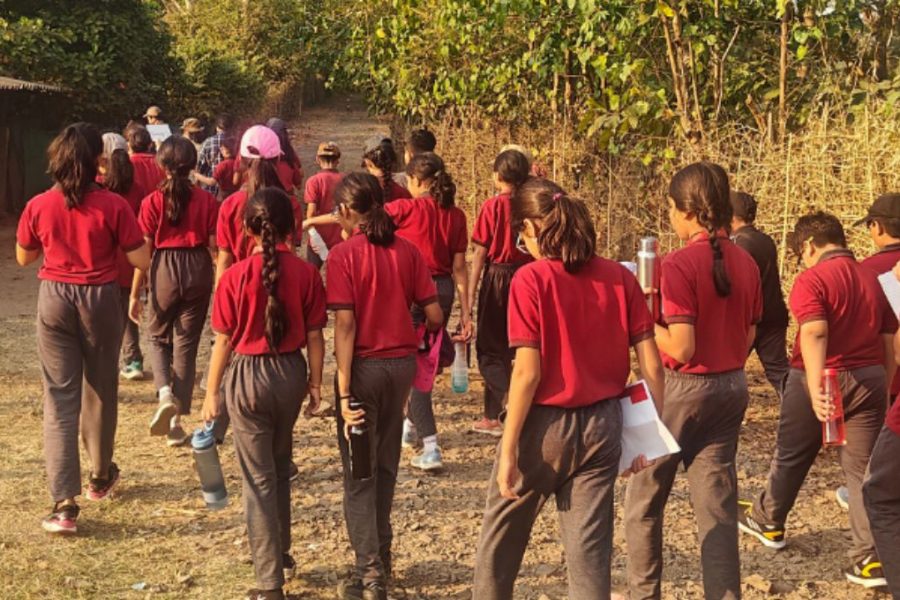
The final day brought students deep into Ratapani Wildlife Sanctuary for a guided nature trail. With naturalist Mr Mitra leading the way, they identified native trees like teak and palash and learned about the adaptive strategies of dry deciduous forests. A highlight came when they stumbled upon a tree marked by tiger claw scratches — a territorial sign of the forest’s elusive predator.
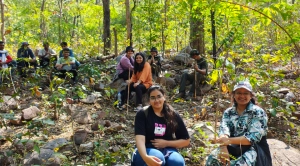 Midway through the trail, the group paused for a moment of silence. Without the constant noise of the city, the students began to notice subtler sounds — the rustle of leaves, bird calls, the hum of insects. What began as a trek turned into a mindfulness exercise, teaching them that awareness is at the core of conservation.
Later, at the resort, survival training expert Mr Arun Rai conducted a hands-on workshop on wilderness survival. Students built makeshift shelters, tested their stability, and brainstormed survival strategies for being stranded in the wild. This challenge-based learning taught them teamwork, creativity, and problem-solving — skills that reach far beyond the forest.
A Window to India’s Tribal Heritage
No visit to Bhopal would be complete without understanding the region’s indigenous roots. A visit to the Tribal Museum of Madhya Pradesh offered exactly that. Students wandered through immersive installations showcasing the lives, beliefs, and art of various tribes. Life-sized tribal dwellings recreated using natural materials gave them a sense of authenticity — dim lighting imitating traditional oil lamps and murals narrating myths of creation and community.
They observed how tribal art reflects harmony with nature — from motifs inspired by rivers and forests to symbols of fertility and protection. For students from urban environments, it was an eye-opening lesson in sustainability long practised by India’s first ecologists.
From Learning to Innovation
The final leg of the trip returned to the question that drives every SCEL programme: how can learning transform into action? During a reflective session led by Mr Mitra and Mr Anuj Sharma, students brainstormed real-world projects inspired by what they had experienced. The ideas were bold and rooted in sustainability —
- A solar-powered camera trap to reduce maintenance in wildlife monitoring.
- An AI-based early detection system for forest fires.
- A data analytics project for Madhuban Resort’s ecological research.
Under the guidance of Dr Vaishali Wadhe, these student-led initiatives will continue back on campus — proof that the programme’s impact extends far beyond the trip itself.
Reflections That Stay
When asked what they enjoyed most, the answers revealed how deeply the experience resonated:
“Camping and stargazing made me see how small we are in the universe.”
“Bhimbetka felt like time travel — the walls spoke history.”
“The survival challenge taught me teamwork in a real sense.”
By the end of the journey, the students had not just learned about ancient art or forest ecology; they had lived it. Anubhuti: Bhopal redefined learning as an act of discovery — one that connects intellect with empathy and action with purpose.

Leave a Comment