

India has an incredible living tradition of craft. Its master craftsmen and women are exceptional artisans who carry forward art forms passed down through generations. These artisans preserve the country’s heritage and act as a bridge to the future, creating works of enduring beauty. These traditions are a source of national pride and deserve constant encouragement and support to ensure their preservation and growth.
This virasat—this legacy—is part of the country’s collective memory. The challenge lies in linking this memory to imagination and dreams.
In today’s economy, artisans often do not receive the recognition they deserve. They are labelled simply as craftsmen and women, typically working for a wage. While everyone earns a living for their work, compensation and acknowledgment vary greatly.
The Somaiya family hails from Kutch. However, for many years, their efforts in education, healthcare, and rural development have been focused in Maharashtra and Karnataka. Their primary business, Godavari Biorefineries Limited, operates in these states, which they regard as their karmabhoomi.
 Shri Samir Somaiya’s father was born in Kutch and often expressed a deep desire to create a social impact project in his birthplace—his matrubhoomi, his vatan. He had even purchased land for this purpose but passed away before he could bring his dream to life.
Reflecting on his father’s unfulfilled vision, Shri Somaiya often wondered how artisans could be brought into the mainstream. His family’s deep appreciation for art and craft—his wife, mother, mother-in-law, and sister often wearing traditional textiles, and both his father and father-in-law being collectors and patrons of art—further inspired this thought.
To truly empower artisans, he believed they needed exposure to the larger world—where memory could evolve, and dreams could merge with creativity and fantasy.
This vision led to the creation of Somaiya Kala Vidya in Kutch, a school dedicated to educating traditional artisans in design and business. Established with the goal of transforming artisans into artisan-designers, Somaiya Kala Vidya has graduated between 10 and 20 artisans every year, including both women and men. The initiative recently expanded to Bagalkot in Karnataka, with plans to reach more crafts and regions across India.
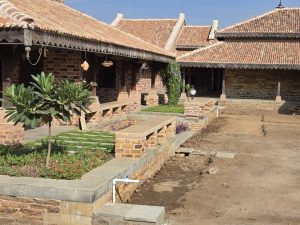
Over the past decade, a remarkable institution has taken shape—a beautiful campus designed by Hemen Sanghvi of Morbi, constructed using traditional materials and techniques. Judy Frater, renowned for her pioneering work in design education for artisans in Kutch, served as the founding director and led the school for its initial years until 2019. Today, Nishith Sangomla serves as the Director, and the institution operates under the umbrella of Somaiya Vidyavihar.
 The Diploma Awarding Ceremony held at the Kutch campus is a truly inspiring event, attended by thousands of villagers who come to celebrate the achievements of the graduating artisan-designers. It offers artisans, their families, and their communities a renewed sense of pride in their craft.
Mrs Amrita Somaiya, deeply passionate about textiles, works closely with the team to revive and expand India’s textile traditions, starting with Kutch. Crafts such as Ajrakh, Bandhani, Souf, Mashru, and Batik have all found a nurturing home at Somaiya Kala Vidya. Young members of artisan families are returning to their virasat—their heritage—with new energy and purpose.
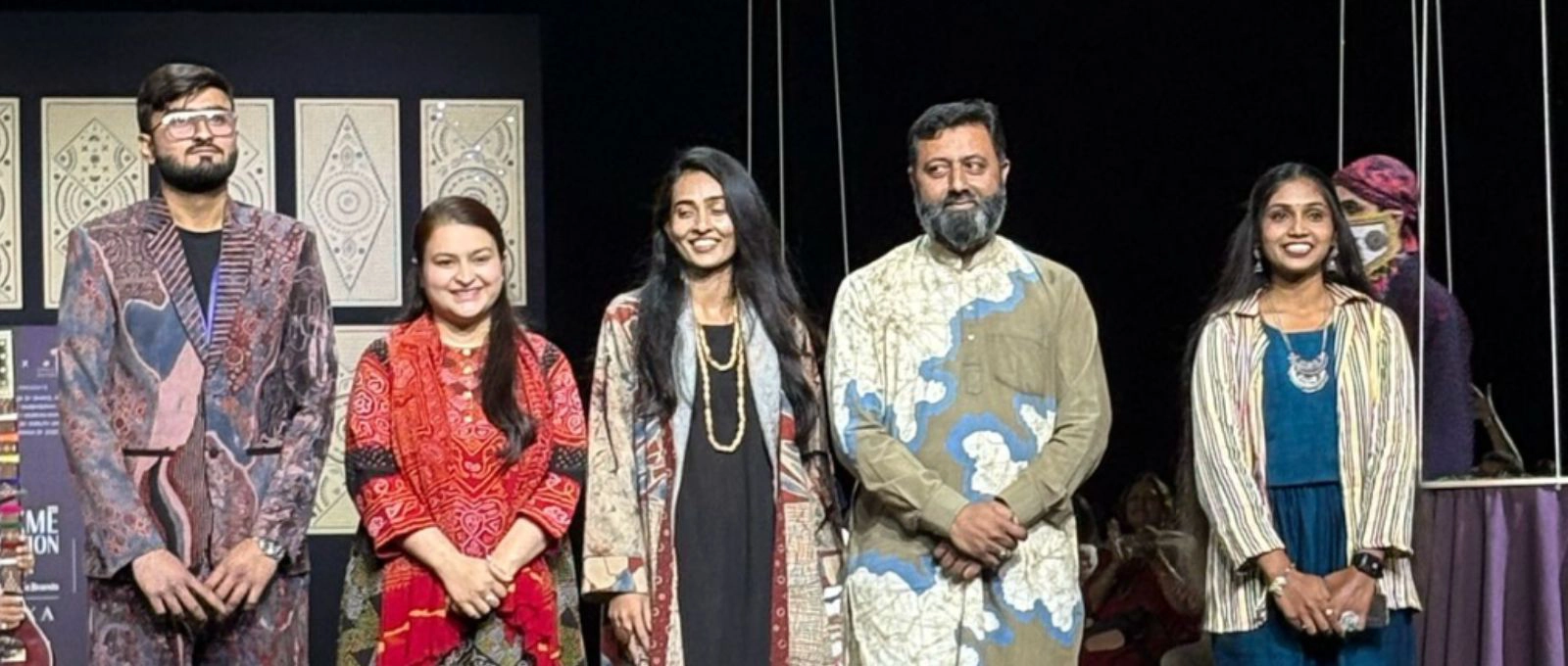
Recently, five artisan-designer students—Shakeel Bhai (Batik), Amruta (Mashru), Muskan (Bandhani), Mubassirah (Ajrakh), and Zaid Khatri (Ajrakh)—were invited to showcase their creations at Lakme Fashion Week.
Reflecting on this milestone, Amrita Somaiya shared,
“Seeing our artisan designers take the stage at Lakme Fashion Week was nothing short of magical. A dream, nurtured, finally came to life and I could feel the emotion in every stitch, every weave that graced the runway. This was not just a show; it was a celebration of tradition, of design education, craftsmanship, and the artisan designers who pour their soul into their work. Watching them receive the recognition they richly deserve was overwhelming.”
The event, held at the Jio World Convention Centre in Mumbai, showcased the creative brilliance of these artisan-designers and highlighted how platforms like Lakme Fashion Week can give wings to their talent while instilling pride in India’s cultural heritage.
As Shri Samir Somaiya often emphasises, appreciating India’s art, architecture, music, literature, and other inherited treasures is vital. When people engage with these traditions in their own time and context, they begin to value them more deeply and find ways to make them part of everyday life.

Leave a Comment